Financial Fraud Attempts Growing

Financial Fraud Attempts Growing

Data breaches, unfortuanately, have become a common occurance in this modern world.  High-severity breaches include sensitive data such as social security numbers and passwords. With so many of these instances, it is essential to review your statements and monitor your accounts regularly. 

At the Bank, we continue to see the number of attempts by fraudsters to gain access to client accounts grow. They use the information found on the dark web from the hundreds of data breaches to impersonate the customer on the phone. (This is why we go to such lengths to accurately identify you when you call into our Customer Care Team.) Or with that info, fraudsters can sometimes guess the client’s ID and password for online banking, which they will then use to transfer funds or send payments to fake businesses.

How can you best protect yourself from these scenarios?

  • Check your statements routinely and call the Bank if you see any irregularities.
  • Use long passwords with at least ten characters and a mix of alphanumeric characters (A, b, 1, 9) using upper and lower case and symbols (@, $, %, *).
  • Never use the same passwords on multiple sites.
  • Speak to a banker to set up a security challenge pass-phrase that must be shared before making any changes to account(s).
  • Never use your mother’s maiden name or other easily obtained information for passwords or security phrases. These can be found on genealogy sites or learned from your social media. 
  • Update the Bank with your current contact info, particularly your cell phone number.  This helps us contact you faster if we notice something odd with your account.
  • Those fun quizzes on social media about “have you ever” or trivia contests – don’t do it. Those are often collection points for hackers to gain extra info about you. 

 Other tips and resources for protecting against financial fraud are available here.
Fraud Protection Tips

If you ever notice something odd or feel your account may have been compromised, please always contact the Bank immediately. 
 Ashland: 573-657-0849  |  Columbia: 573-447-1771  |  Fulton: 573-642-3322  |  Mokane: 573-676-5711
Or Reach Any Locations Using:
 800-446-2265

Staying Ahead of Fraudsters with Fraud Prevention Enhancement

Staying Ahead of Fraudsters with Fraud Prevention Enhancement

The Callaway Bank takes cyber security and protects our clients from fraudsters seriously. We are proud to announce that we have recently enhanced the fraud prevention tools in our Digital Banking platform.  Going forward, if the fraud prevention system notices something out of the ordinary in your Digital Banking use, you will be prompted to enter a random code sent to you via text or through the DUO app (whatever method you chose for your out-of-band authentication) before continuing.

How Does It Work?

Once the fraud prevention tool has learned your usual usage patterns, it can recognize potential attempts by fraudsters to gain access to your account. The tool can detect, among many variables, sudden changes in location, suspicious logins from different devices or IP addresses, and attempts to transfer unusual sums of money from your account. When unusual activity is detected, the system will send an alert prompting you to authenticate yourself via text message or mobile application.


What About Legitimate Out-of-the-Ordinary Activity?

We understand there may be times when you want or need to use Digital Banking in ways outside of your usual behavior – such as when traveling abroad or using a different device than usual. In these cases, our fraud prevention tool won’t impede legitimate activities; instead, it will simply ask you to authenticate yourself so that we can verify it is indeed you who is attempting access. This helps ensure that no one else can gain access to your account without authorization.

Staying Ahead of the Curve

Protecting our clients from fraudsters and other cybersecurity threats is always a top priority.  The fraud prevention system is only one of many system tools we use to stop cybercriminals.  While no automated system is 100% perfect, we feel this new fraud prevention enhancement will help a great deal in preventing unauthorized access to your Digital Banking.  As always, we will continue to develop new security measures to help protect you.

Contact Us

How Much is Your Information Worth?

How Much is Your Information Worth and How To Protect Yourself from Account Take Over

Fraud prevention button, concept about cybersecurity, credit card and identity protection against cyberattack and online thieves

Were you aware that your email account is worth real dollars on the hacker market? This might explain why we continue to see more and more people with their Gmail, and other accounts being hijacked. According to Privacy Affairs and their 2022 Dark Web Price Index, a person’s information is seen as a valuable resource to cybercrooks because they can do so much with it.  While you might be thinking, “Why would anyone want access to my email account? It’s not my checking account.” You would be surprised what a resource the average person’s email account is.

The biggest reason your ordinary, everyday email account is valuable is that it is often the key to all of your other online accounts. When signing up for anything such as Amazon, credit cards, or online banking, you provide your email as a contact point. If someone then tries to take over that other account, they simply request a new password to be emailed, and BAM, now they have that account too. That gets really scary when it’s your bank account or credit card, but even with access to your Amazon account, they could easily order a couple of 52″ flat-panel TVs and then sell them for cash.

Another way we see crooks using hijacked accounts is that they monitor who you do business with, and then send people a request posing as you.
Example: “Hi Bill, would you please wire $3500 to a friend of mine in California? His name is xxxxx, and the account number is xxxxxx ….” Fortunately for our customers, we will not send a wire-based from an email request, but that doesn’t mean it couldn’t happen at another well-meaning business. The important thing is not to give someone the opportunity to hack into your account

Fraudsters gain access, change passwords to lock you out, and hold accounts hostage until you pay their fee. This type of fraud happens to both individuals and businesses.

Here are some suggestions to help prevent an account takeover:

  • Use only one password for one account.  Don’t ever use the same password for multiple accounts, especially your email account.  
  • Use a password with at least 8 digits and with a mix of numbers and special characters.
    A professional hacker can crack a 6 digit, lowercase-only password in 10 minutes. Make it 8 digits, but still only lowercase letters, and it extends the time by a few minutes.  Instead, just adding a mix of uppercase, numbers, and symbols makes it much harder and longer to crack!  And don’t think that abcd1234 will throw them off.  That is one of the most common passwords used and common names found in the dictionary are all tested first.
  • Avoid Public Internet or Wifi
    Hackers can easily break into public internet access points such as free public wifi offered in a cafe or hotel.  They will often spoof a free wifi spot with a similar name to the real establishment. When you log into a compromised wifi network hackers can steal information from your phone or from the data you’re sending and receiving from a website. Don’t ever log into your bank accounts through public wifi.  If you have to use a public wifi use a VPN to encrypt your connection.
  • Be mindful of “shoulder surfers.”
    Be aware of your surroundings and mindful if someone is nearby who could look over your shoulder when you key in your password.  That cute guy at the coffee shop may be smiling at you because he knows how to access your account.
  • Be wary of emails from strangers, especially if it comes bearing gifts.
    Your mama’s advice about not talking to strangers applies here as well.  If you get an email from someone you don’t know, do not click on any of the links, and certainly don’t open any attachments.  They almost always will load some kind of malware or virus that can give a crook access to your computer or send them all of your keystrokes.  Emails now often come with a promise of a gift card to your favorite store if you take a survey or visit their website.  You’re better off just deleting those.
  • If you suspect your account has been hacked, stop using your computer.
    If your account has been hacked, your computer may be hacked as well.  If a cyber-crook has access to your computer, changing your Gmail account password won’t help.  They’ll know the new password also.  Hire a computer pro to check your machine for viruses and malware, and remove them.  Having antivirus software that is up to date can help prevent this.  However, if you clicked on a nefarious link it will then bypass your security software. In the meantime find a computer or device that you don’t normally use (preferably not a public computer). You can access your account with it to change your password.

We hope this will help you realize that your computer security is not something to take lightly.  While we can’t help you with fixing your computer, we can help you if you feel your checking or savings accounts may be in jeopardy.  Please contact your Personal Banker or our Customer Care Team if you have concerns that someone may have access to your bank accounts or online banking.  We can walk you through the process and help you determine if your bank accounts are at risk. 

Fraud Prevention Center

Is a Joint Bank Account Right for You?

The decision to open a joint bank account might not be as straightforward as you think. There are a variety of benefits and risks associated with joint bank accounts that all involved individuals should weigh before opening a new account.

Who Should Open a Joint Banking Account?

Joint accounts offer a new level of convenience and flexibility for the account holders that weren’t possible before. Many joint banking accounts are started by couples who move in together, get engaged, or are married. The sharing of a bank account is a big step for most relationships as it combines financials together and forces partners to manage money with another person’s perspective in mind.

Joint banking accounts can also be a great solution for helping someone manage their own money. Parents will often set up joint accounts with their children as they enter their teenage years in an effort to help teach healthy financial habits and money management. These same accounts are also helpful for individuals with aging parents who may need additional help overseeing their finances.

Another common reason for starting a joint bank account is for business partners to have equal insight and responsibility for the related finances. Entrepreneurs and business owners often have co-owners or other stakeholders who need access to banking information and funds for day-to-day operations to run smoothly.

The Benefits of a Joint Bank Account

  • Convenience: The biggest benefit and most commonly cited reason for opening a joint banking account is the convenience it affords multiple individuals when managing combined financials. Now all involved parties have equal visibility and responsibility for the management of their money. This helps co-owners pay for joint expenses easier, increase their buying power, and more.
  • Increased FDIC Insurance: Combined accounts ensure each co-owner is listed on the account, increasing the amount of money covered by the FDIC. For example, a joint banking account held by you and your spouse would be FDIC insured for up to $500,000 — which is double what an individual bank account is covered for.

The Risks of a Joint Bank Account

  • Financial Disagreement: Everyone has their own idea of how to best manage finances. This also leads to every individual having a different relationship with money. Joint banking accounts can cause disagreements and strife between account holders if they cannot agree on a middle ground strategy.
  • Lack of Privacy: Due to multiple people having access to the account, all account co-owners can see financial history and actions, such as payments, withdrawals, and balances. This level of transparency can make it hard for some account owners who wish to not have every banking action be able to be scrutinized or questioned.
  • Equal Responsibility: A joint banking account puts all co-owners on the hook for any overdrafts or issues associated with the account. This means the account assets are open for seizing to creditors, liens, and lawsuits if other co-owners get into financial or legal troubles.


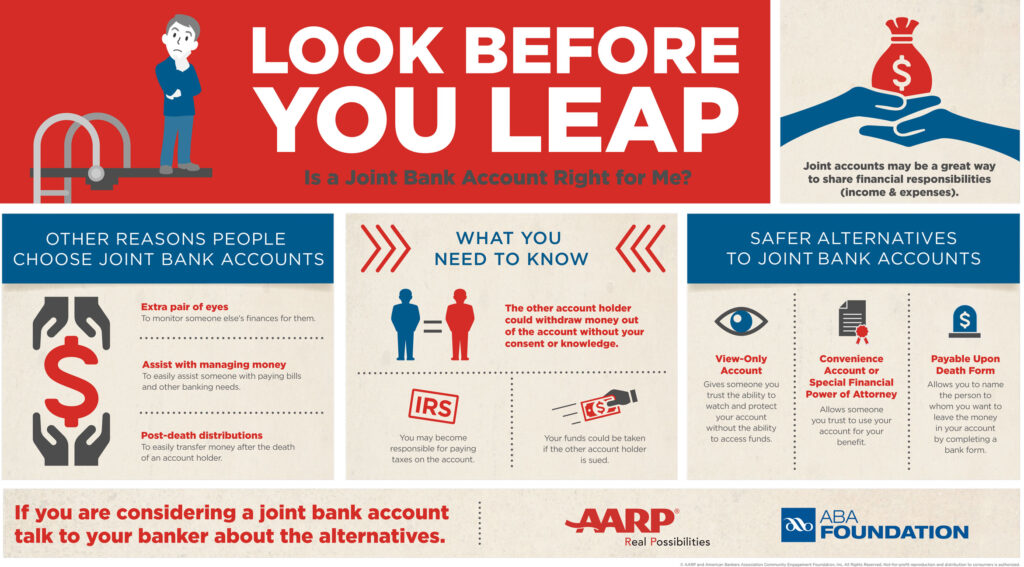
The American Bankers Association Foundation and AARP have produced an infographic to help people understand the risks of joint bank accounts.

Consumer Alert: Mortgage Scam

Have you received a postcard or letter with “an important matter” regarding your mortgage?

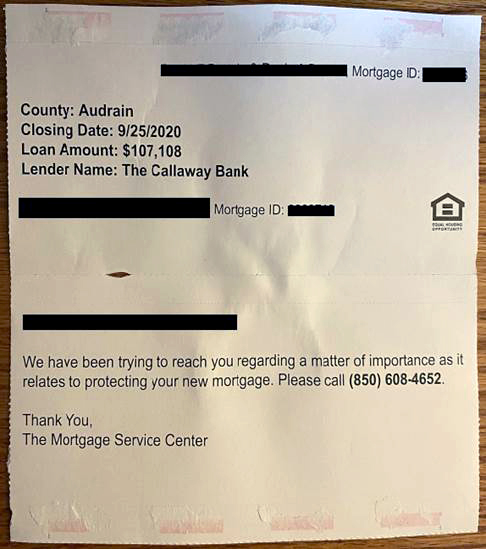
Have you received a postcard or letter about a time-sensitive issue with your mortgage urging you to call an unknown phone number? If you have, you are not alone. Scammers all across the country are pulling public data records to target you and your information.

The first thing to understand is that these mailings did not come from The Callaway Bank or any other financial institution. They are sent to homeowners in the hopes of selling them something or, most often, to steal their identity by tricking them. Recipients are asked to call a phone number about an “important matter” with their loan. This scam is especially tricky because it looks like a late notice or official letter that mentions your lender by name.

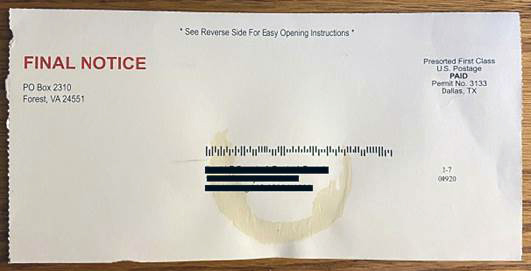
The notices will often have a small disclaimer on the bottom stating, “Not Affiliated With” and your lender name. However, in the example below, there is no mention of that.


Final Notice Scam MailMortgage Scam Mail


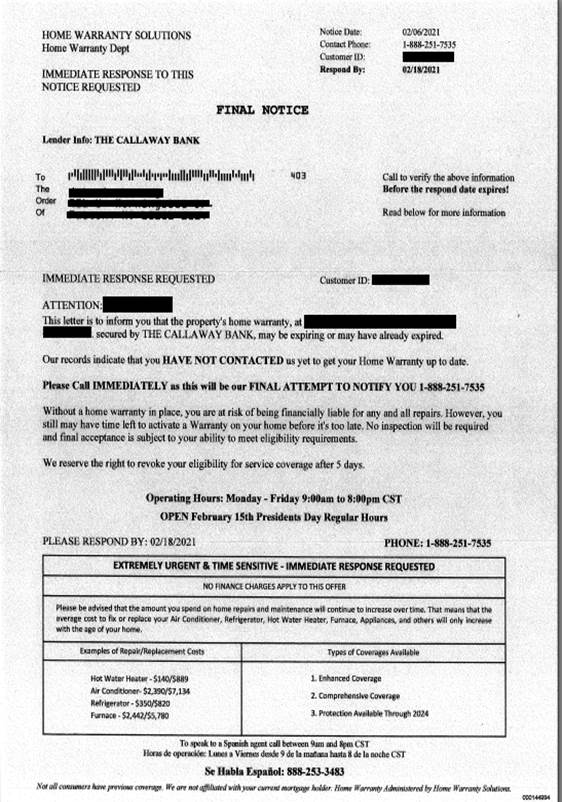
The example seen below is from Home Warranty Solutions and mentions The Callaway Bank as the lender. According to The Better Business Bureau, Home Warranty Solutions has a C rating and not BBB Accredited. The letter also gives the impression that they are working with the bank. But that is not true at all.


Home Warrenty Solutions scam mail


The Callaway Bank is committed to protecting your personal information, and we do not sell or otherwise distribute it to non-affiliate third parties. There is some information with mortgages, regardless of what lender you might have worked with, that is public record. Public Record entries are how scammers like this obtain your information. For example, companies can get information from a county recorder’s office, such as lien filings or property purchase and transfer documents, which are all public records. The records and the information they can gather are used to develop letters with detailed information to help legitimize the “important matter” they refer to.

If you receive the notice, disregard and dispose of it as you would any other junk mail. Calling the number may connect you with a real person, or it may connect you to an automated recording. Regardless, do not offer your personal information. It could lead to some unfortunate problems.

Please contact us for any questions you may have.