What Homeowners Need to Know About Reducing Mortgage Mail Fraud
Whether you’re closing on a home or purchased it decades ago, receiving regular updates from your lender is expected throughout the duration of the mortgage. Unfortunately, third-party companies have begun targeting this relationship and sending out large amounts of home loan-based junk mail. These postcards and letters often appear to be from your mortgage lender or another official organization, which can cause confusion and even put you at risk for fraud. Here’s a closer look at who’s sending these documents and how to stop it.
Read More: How to Reduce Mortgage Junk Mail
Where Are These Mortgage Postcards & Letters Coming From?
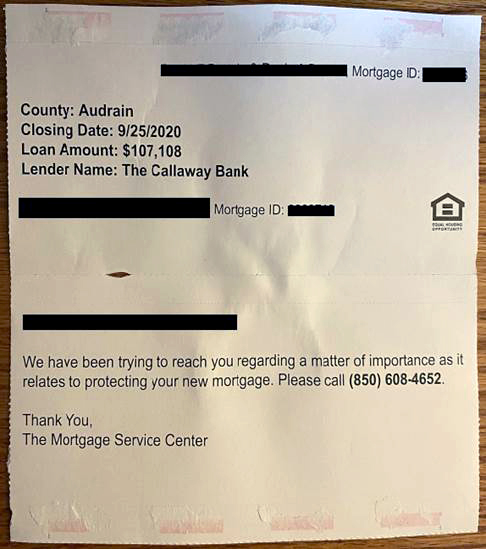
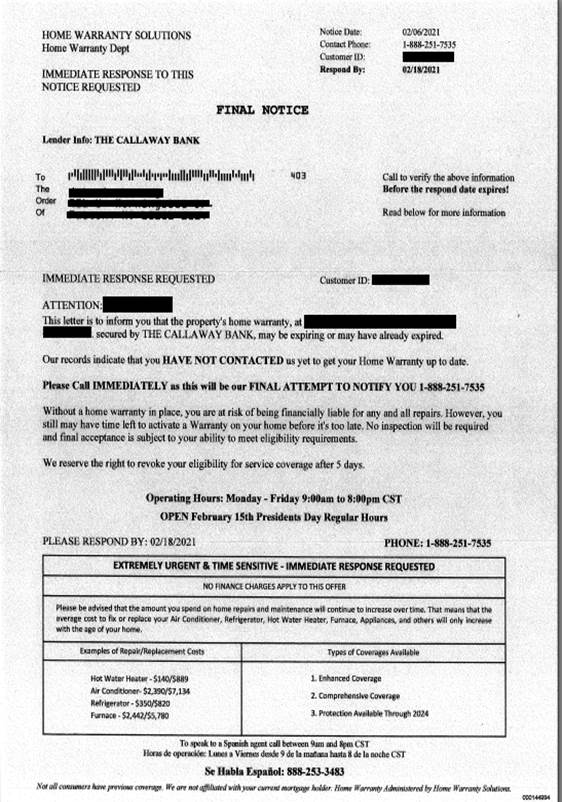
Some of the companies behind the junk mail are legally legitimate businesses, such as financial lenders and warranty companies. However, they often utilize deceptive practices to get the attention of homeowners across Boone and Callaway counties, such as printing the originating bank’s name on the postcard and adding an account number. Fraudsters also follow the same strategy but operate completely illegally. For example, they may pose as the bank itself.
The goal of these documents is usually always financial, but they go about it in a few different ways.
The goal of these documents is usually always financial, but they go about it in a few different ways. They may suggest important documents need filing or a payment is due or past due, requesting that you call them as soon as possible. Offering help to prevent foreclosure is another common tactic, along with mortgage modifications, like promise of a lower interest rate.
In most cases, they present just enough detail to lure the homeowner into contacting them in order to convince the homeowner to sign up for an unnecessary service or refinance with their company, which is usually accompanied by substantial fees. If there’s not a legitimate business behind it, the fraudsters may request a wire transfer or pre-emptive payment to steal funds directly.
How Do They Get Homeowner Information?
Applying for a mortgage involves providing an incredible amount of personal detail. At The Callaway Bank, we keep all these details private and protected, never sharing or distributing the data to non-affiliates. However, the purchase becomes public record at closing. As a result, elements included in the deed transfer are easily obtainable through the state or local recorder’s office, including name and location of property. Third parties can pull the information and sell it to other companies or use it themselves for mailers.
New loans, like a mortgage, are also reported to the main credit bureaus: Experian, TransUnion, Equifax, and Innovis. Unfortunately, these credit bureaus often sell personal data to third parties. As such, other companies can pay to access your details, like age, property information, and lender name, and use it for their own gain.

How to Identify Third-Party Loan Mailers in Mid-Missouri
A major challenge with mortgage junk mail is that the third-party companies replicate the look of official documents. Luckily, there are a few common signs that indicate potential spam or fraudulent materials.
Bright Colors
Typically, banking documents are printed on white or neutral backgrounds. Third-party mailers, on the other hand, may utilize bright colors to catch your attention. Approach red, yellow, and other abnormal shades with caution.
Incorrect Account Information
It’s also common for these documents to list an account number, which makes them appear official. However, it’s seldom the same as the actual home loan account. As such, always be sure to check the number before taking any further steps.
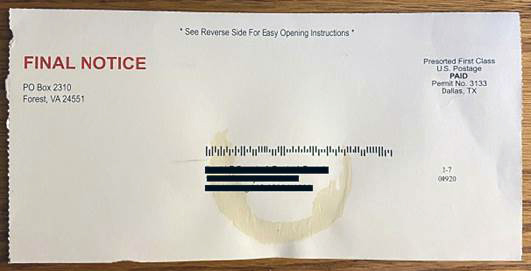
For that reason, prominent words on the postcard or envelope are likely to evoke panic, like “important”, “urgent”, “time sensitive”, and “final notice”.
Alarming Terms
These home loan mailers are designed to prompt the reader to action. For that reason, prominent words on the postcard or envelope are likely to evoke panic, like “important”, “urgent”, “time sensitive”, and “final notice”. Such terms may be bolded and in larger font than the rest of the text to catch the reader’s attention.
Disclaimer
It’s illegal for these non-affiliate companies to pose as the mortgage lender. Yet, they often mention the name of the bank to confuse readers into thinking they’re directly associated with the financial institution. To prevent such tactics from getting them into legal trouble, they may place a disclaimer on the mailer. Typically, it’s in small print and overshadowed by other elements, so complete a thorough document inspection to identify if such a statement is present.

How to Protect Your Information
While it may not be possible to avoid unsolicited mailings altogether, there are a few methods that can reduce unwanted contacts.
Sign Up Online
Consumers have the option to opt-out of pre-screening offers based on credit report information through OptOutPrescreen.com – the official website used by the top four credit bureaus in the U.S. The service allows users to request a temporary five-year ban on data release directly through their website. Simply fill out their online form and provide personal details, like name, address, date of birth, and Social Security number. This step can also help reduce unwanted phone calls.
Permanent Removal
The service also offers a permanent removal option. To opt-out out of their pre-screening offers forever, download the paperwork and mail it in. Once completed, it’s possible to go back and opt-in again through the website.
Reduce Junk Mail
The Direct Marketing Association also allows registrants to specify what – if any – types of marketing-based mail they want to receive, including catalogs. While the junk-mail-suppression service promises 10 years of relief, it requires a sign-up fee. It also isn’t likely to impact any fraudulent senders.
How Your Local Bank Can Help
At The Callaway Bank, we take extensive steps to protect our customers’ data. For example, our fraud prevention system monitors and flags unusual banking patterns to stop fraudsters in their tracks. Our local bank’s Digital Banking solutions also add an extra layer of protection by requiring a secure access code when logging in on-top of utilizing unique username and password details.
Additionally, if you do receive any strange or suspected spam mail, our dedicated bankers are available to check the document’s validity to provide you with peace of mind.